
Click to view
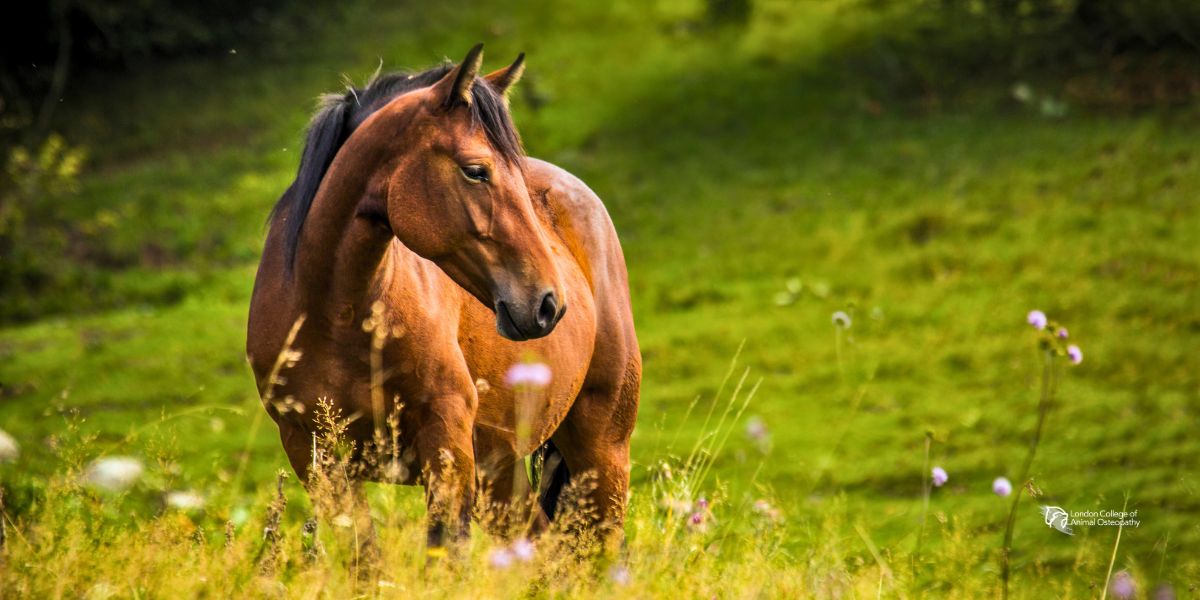
A horse that stands quietly at the back of the yard is often praised for good temperament. But calm behaviour and physiological ease are not always the same thing, and equine osteopathy is beginning to ask what quiet compliance can hide. This thesis turns to the Parelli Horsenality framework, the familiar four-way map of introvert, extrovert, left-brain and right-brain horses, and asks whether these behavioural categories line up with something more physical: patterns of autonomic activation, breathing mechanics and fascial tension. Drawing on osteopathic philosophy, neurophysiology and fascial research, the work proposes that each behavioural type carries a distinct postural signature, from the guarded stillness of a shut-down horse to the extensor bracing of a chronically reactive one. The diaphragm, thoracic sling and thoracolumbar junction emerge as recurring points of interest, structures where breathing, stress and movement all intersect. The reasoning stays deliberately theoretical, built from existing literature rather than clinical trials, and the author is careful to flag where the Horsenality model itself lacks scientific validation. Even so, the central proposition is a provocative one for anyone who works with horses day to day: that behaviour might be read not as personality, but as a window into the nervous system underneath. For practitioners and owners alike, it reframes a familiar question. What if the calmest horse in the barn isn't the most relaxed one?




.jpg)

.png)


.png)
.png)
