
Click to view
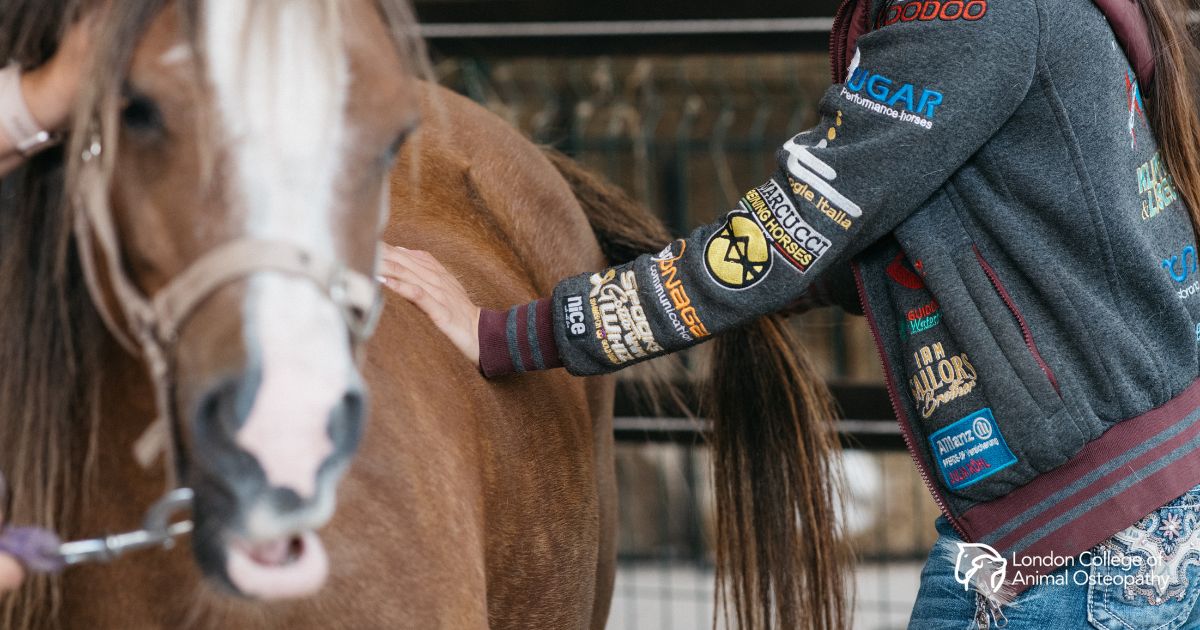
Every horse owner knows the dread that comes with the first signs of colic — the pawing, the restlessness, the refusal to eat. What fewer people consider is that the horse's emotional state in the hours and days before an episode may be just as relevant as what it ate or how it was exercised. Equine colic is not simply a mechanical failure of the gastrointestinal tract. It is increasingly understood as a condition shaped by the nervous system, the microbiome, and the chronic physiological burden of stress. Rachel MacNaughton's thesis explores this less-charted territory with rigour and care, building an argument for osteopathic manual therapy as a valuable adjunct to conventional veterinary management — with particular attention to the emotional dimension of the condition. The thesis traces the pathway from emotional stress to gut dysfunction in convincing detail. Chronic activation of the hypothalamic–pituitary–adrenal axis elevates cortisol, disrupts circadian hormonal rhythm, and alters the composition of the gut microbiome. Prolonged sympathetic dominance suppresses parasympathetic tone, reducing peristaltic efficiency and increasing vulnerability to impaction, spasm, and displacement. The enteric nervous system — long understood as something of a second brain — communicates bidirectionally with the central nervous system via the vagus nerve, meaning that what happens emotionally does not stay there. MacNaughton examines four key osteopathic approaches — visceral manipulation, craniosacral therapy, lymphatic and diaphragmatic techniques, and the direct addressing of emotional restriction — assessing each for its plausible mechanism of action and its potential to modulate the gut–brain axis. The thesis is clear-eyed about the limitations of current evidence, acknowledging that published research on osteopathic treatment of colic specifically remains thin. What gives this work its distinctive character is the author's insistence that the horse in the stable after a colic episode is not simply a digestive system awaiting repair. It is an animal whose nervous system may be stuck in a state of chronic dysregulation — and for whom touch, stillness, and parasympathetic activation may be as important as any medication. The thesis invites practitioners to look at the whole animal, and to ask why.


.jpg)

.png)


.png)
.png)
