
Click to view
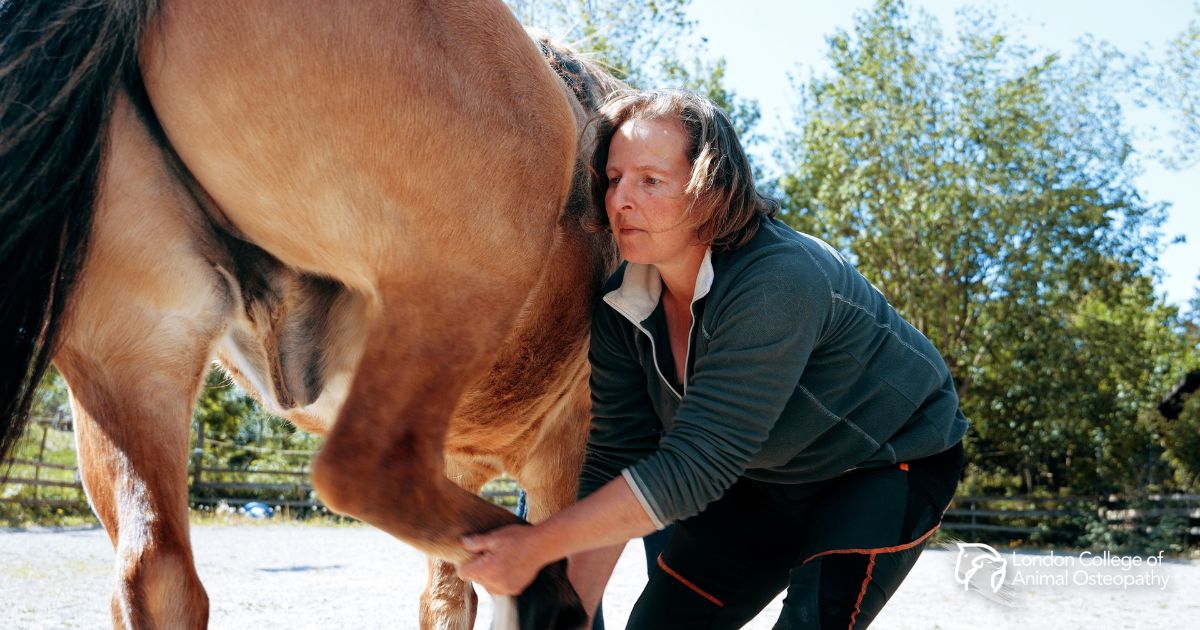
Horses have a remarkably high pain threshold. As prey animals, their instinct is to mask discomfort — to keep moving, keep functioning, keep appearing normal until the underlying problem has progressed beyond what they can disguise. For sport horses competing at high levels, that stoicism is part of what makes them extraordinary athletes. It is also part of what makes caring for them so demanding. Virginia McKey's thesis is aimed squarely at owners, riders, and coaches who want to understand the mechanics of equine injury more clearly — and to appreciate where osteopathy fits into a thoughtful management programme. Written with authority and practical clarity, it works through the major categories of musculoskeletal compromise that affect sport horses, from the elegantly interconnected world of equine fascia to the frequently overlooked stifle joint. The fascia section is particularly rich. Drawing on the landmark 2015 Elbrond and Schultz study — the first to map myofascial kinetic lines in a non-human mammal — McKey illustrates how a problem anywhere along one of seven fascial lines can manifest as symptoms seemingly far removed from the original site. A restriction in the superficial dorsal line, for instance, may present as back pain, topline weakness, and poll sensitivity all at once. Understanding these connections changes how practitioners assess, and how owners observe. The thesis moves through tendon and ligament injuries, sacroiliac dysfunction, cervical pain, conformation problems, gastric ulcers, temporomandibular joint dysfunction, and stifle issues with the same evidence-led approach. Each section includes clinical signs to watch for, an explanation of why that structure is particularly vulnerable in sport, and an account of how osteopathic intervention — alongside veterinary care where required — can support recovery or prevention. Supported by recent research on single-session osteopathic manipulation of the sacroiliac joint and cervical vertebrae, this thesis makes a persuasive case that regular osteopathic assessment is not a luxury for equine athletes but a practical necessity — and that the earlier problems are identified, the better the prognosis for a long and productive career.



.jpg)


.png)


.png)
.png)
