Click to view
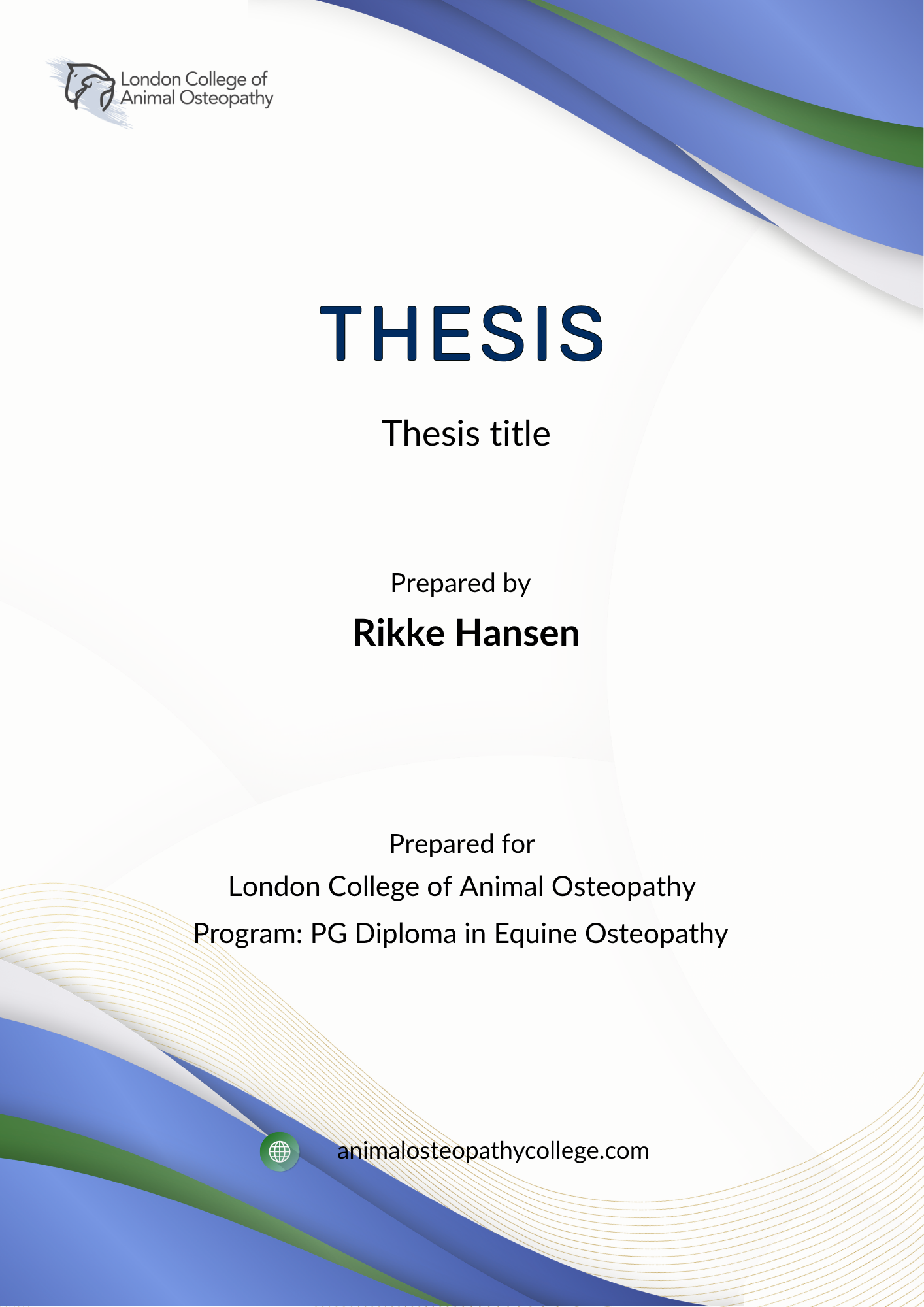
The clinical signs of sacroiliac joint dysfunction in horses are often vague. A horse may show reduced impulsion, resist collection or have an altered feel under saddle, and the joint sits so deep within the pelvis that imaging is of limited help in reaching a diagnosis. Rikke Hansen, a veterinarian who wrote this paper for her equine osteopathy studies at the London College of Animal Osteopathy, asks whether cranial osteopathy has a legitimate role in managing sacroiliac joint dysfunction. The mechanisms behind cranial techniques remain debated, and movement at the sacroiliac joint itself is extremely small. Hansen starts with anatomy. She traces the continuous dura linking skull to sacrum and explains why sacroiliac dysfunction often behaves more like a problem of coordination and protective muscle guarding than a joint out of place. She then weighs human craniosacral research, observational equine studies and recent controlled work in horses for what each can and cannot show. The result is a carefully balanced paper that refuses either to dismiss cranial work or to oversell it. Where Hansen finally positions it, and the conditions she attaches, will interest any rider, vet or practitioner managing a horse with reduced impulsion or difficulty engaging the hindquarters.