There are some conversations about horses that can be surprisingly difficult to have, and saddle fit is one of them. For me, learning to navigate these conversations was a significant growing pain in my professional development. This became apparent through experience, first while working as a saddle fit professional and then, increasingly, as an equine bodyworker. It took a few crash-and-burn experiences before I began to think carefully not only about what I was saying about saddle fit, but also how I was saying it, when I was saying it, and who needed to be part of the conversation.
For the owner, a comment about the saddle can feel personal. We love our horses and want the very best for them, particularly when we have invested so much time, money, and trust in the people advising us. For the professional raising the concern, there can be an equally difficult balance between speaking up for the horse and maintaining positive working relationships with the owner, coach, trainer, barn owner, veterinarian, saddle fitter, bodyworker, and other professionals involved in the horse’s care.
Approaching Saddle Fit Concerns With Curiosity
Each professional brings their own expertise, experience, and perspective to the horse. These naturally influence what they observe and the conclusions they draw. Recognising this can help us approach differences of opinion with curiosity rather than defensiveness. Communicating our observations and concerns respectfully, while remaining open to the perspectives of others, is an important part of keeping the horse at the centre of the conversation.
The challenge is not simply recognising when a saddle may be contributing to a problem, but knowing how to open the conversation. From an osteopathic perspective, this begins with recognising the horse as an integrated whole. A response to palpation, a change in posture or movement, or an alteration in breathing can offer valuable information, but none tells the whole story. By approaching these observations with curiosity and a willingness to listen, we can ask better questions, explore possible relationships, and allow the horse’s responses to guide our understanding without jumping to conclusions.
Start With What the Horse Is Showing You
A useful starting point is to share observations in neutral, fact-based terms: “I noticed that when I palpated this area of the back, your horse reacted in this way.” This invites the owner into the conversation without assigning blame or jumping to conclusions, creating an opportunity to explore what might be contributing to the horse’s response.
Saddle fit may be part of the picture without being the primary cause. Posture, movement, riding, training, previous injury, nutrition, compensation, conformation, and environment can all influence how a horse moves and functions. Equally, a saddle deemed to fit well may warrant further consideration if the horse’s responses raise questions. In my experience, this is why it is important to remain observant and think critically rather than relying entirely on another person’s assessment, while recognising that recommendations can sometimes be influenced by commercial interests.
The goal is not to identify the saddle as the cause, but to remain open to its possible role. By sharing what we observe and exploring the possibilities with the owner, we can work together to better understand the horse’s needs.
The Horse Speaks; the Owner Helps Us Listen
In a related manner, we can allow positive changes in the horse during a bodywork session to speak for themselves while inviting the owner to be part of the process. If the owner is present, we may be able to show them a response in real time. As we work within the weight-bearing area, for example, the horse’s breathing may deepen, they may yawn repeatedly, their expression may change, or their posture may become more comfortable. These observable changes can open the door to a conversation about saddle fit; the owner might even ask us to look at the saddle or share other concerns about their horse’s health.
These changes may or may not be directly related to the saddle, so we need to be careful not to overinterpret them. For example, the owner may share that their horse recently had an abscess that caused tension in their trunk muscles. Even so, these responses provide valuable information and an opportunity for the owner to observe their horse, ask questions, and develop a better understanding of what we are seeing together. This helps foster a collaborative conversation rather than leaving the owner feeling that something is being done to their horse or that they are being told they have made a mistake.
Communication Is Part of Our Professional Skill Set
Creating this kind of collaborative experience requires more than clinical knowledge; it also requires an awareness of how we communicate and involve the owner in the process. Developing client-centred communication skills has become an important part of my professional development. Over time, I have come to appreciate that these skills are grounded in several key principles.
Listening First
Listening can be disarming and is a critical part of the osteopath’s intake and information-gathering process. The client knows their horse, its history, and its day-to-day experience in ways we cannot observe during a session. Ideally, the client is also the hub connecting the various professionals involved in the horse’s care. Listening carefully helps us gather important information, understand the wider context, and remain open to what we can learn from the person in front of us.
At the same time, information can become distorted when relayed second-hand, particularly when technical knowledge is involved. Asking the owner to share reports from other professionals involved in the horse’s care can help clarify findings, reduce misunderstandings, and give us a more complete picture of the horse’s needs.
Speaking from a Place of Empathy
As horse care professionals, we ideally strive to approach the horse with empathy and curiosity, seeking to understand what they may be experiencing rather than simply judging their response. We can extend that same intention to the human standing beside them. This means trying to understand the client’s perspective, even when we disagree with it. They may be acting on information they genuinely believe to be correct and recognising this can help us communicate our concerns without making them feel blamed or judged.
Recognising That We All Start Somewhere in Our Learning
None of us began with the understanding we have today, and we have all relied on the guidance and experience of others along the way. Knowledge develops over time, and recognising this can help us share what we know without positioning ourselves as having all the answers.
Understanding the Information Others Have Received
There is a great deal of thoughtful, horse-centred information available to owners, but there is also information that may be outdated, influenced by commercial interests, or based on a different understanding of the horse. Most owners are doing their best with the information and guidance available to them. Recognising this allows us to approach the conversation with curiosity rather than judgement.
Using Diplomacy When Working Alongside Other Professionals
Our observations may sometimes differ from those of a coach, trainer, veterinarian, barn owner, or saddle fitter. Communicating those differences respectfully, without undermining someone else’s expertise, allows us to raise concerns while preserving collaboration. Timing, inclusion, and presenting our observations without judgement can help keep the focus on the horse rather than on who is right.
Learning to Read the Environment
Understanding the environment in which we work is just as important as understanding the horse in front of us. Every barn has its own culture, relationships, priorities, and dynamics. There may be times when the horse’s comfort competes with broader equestrian goals. Recognising this can help us determine how and when to raise concerns, as well as what we can realistically influence. Learning to navigate these different environments allows us to build and maintain relationships, increasing the likelihood that we can remain involved in the horse’s care and continue to make a positive difference.
When a Saddle Fit Conversation Goes Wrong
This is something I have learned through experience.
I was once in a situation where the barn owner, who was also involved in coaching and training, had adjusted the horse’s saddle herself. Since my previous session, the horse’s posture and back health had deteriorated, and I felt the saddle might be contributing. I was unaware that the barn owner had made these adjustments, and she was not present when I worked with the horse. Based on what I was observing, I naturally suggested to the horse’s owner that we look at the saddle.
When the barn owner returned, the client confronted her about the possibility that the saddle had contributed to the deterioration in her horse’s condition. The barn owner was understandably unhappy. When she spoke to me, her tone and expression suggested that she felt undermined and attacked. Looking back, I can understand why she may have felt that way. Ultimately, I was not invited back.
This experience has shaped how I approach these conversations. I have learned to ask more questions, involve the barn owner from the outset where appropriate, and raise concerns about saddle fit in a way that encourages curiosity rather than defensiveness. I have also learned the importance of taking responsibility when a conversation becomes uncomfortable. These lessons have strengthened my commitment to approaching saddle fit discussions with care, openness, and a collaborative mindset.
Losing a barn had a significant financial impact and was a powerful teacher. But the most difficult part of that experience was not the loss of the professional relationship; it was knowing that the horse had also lost the benefit of my continued input into its care.
Working Within Limitations; Supporting the Whole Horse
There may be situations in which the primary source of discomfort cannot immediately be removed. For osteopaths and other bodywork practitioners, this does not necessarily mean there is nothing we can offer. We can continue to work with the horse in front of us, observe changes in posture and movement, and support comfort and functional ease within the circumstances we encounter. This does not mean that physical or other forms of therapy can compensate indefinitely for a poorly functioning saddle, nor that every change we observe is necessarily related to saddle fit. Rather, it means keeping the bigger picture in mind while doing what we can to support the horse’s comfort and function.
In my next article, I will explore how saddle fit may influence the horse’s interconnected physiological systems and how osteopathic treatment may help support comfort, posture, movement, and function when saddle-related issues cannot be immediately resolved.
Bringing It All Together
Looking back on my experiences, I have come to see that navigating saddle fit conversations requires more than knowledge of the saddle or an ability to recognise changes in the horse. It calls for curiosity, careful observation, critical thinking, empathy, and an understanding of the relationships and circumstances surrounding the horse.
From an osteopathic perspective, this means remaining open to the complexity of the whole horse. What we observe may offer valuable clues, but it does not always provide a definitive answer about the source of a problem. Our role is to notice, question, explore relationships, and communicate our findings without claiming more certainty than the evidence supports.
It also means recognising that the owner and other professionals are part of the process. We may not always agree, and we may not always be able to change the circumstances contributing to a horse’s discomfort. However, by listening first, sharing observations respectfully, and working collaboratively where possible, we have a better chance of maintaining the relationships that allow us to keep both the horse, and the owner, at the centre of the conversation.
Build Confidence in Your Saddle Fit Conversations
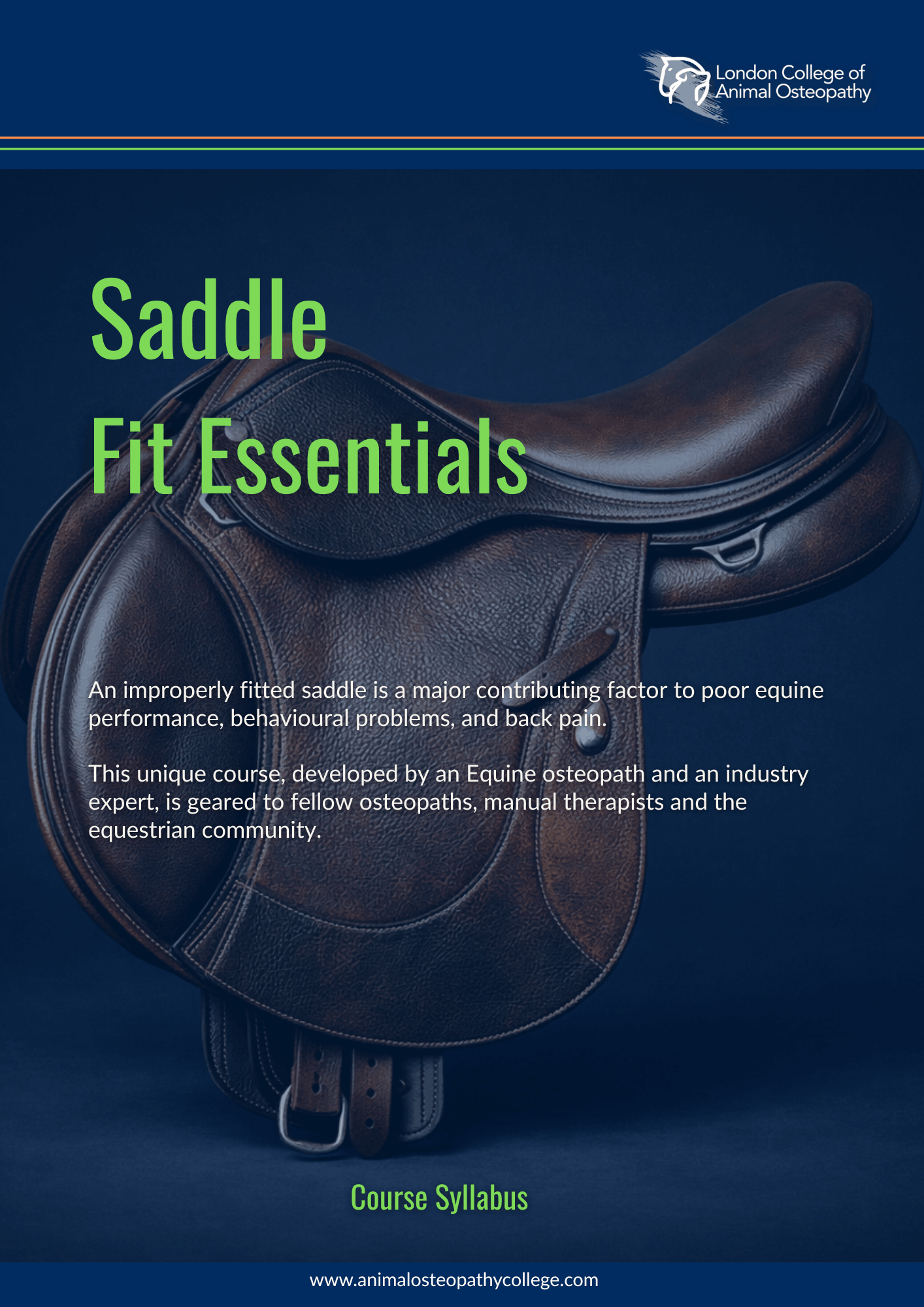
Are you an equine therapist or equestrian who wants to feel more confident when saddle fit comes up? For therapists, saddle fit is often a gap in existing training, yet it shapes much of what we find under our hands, and understanding it helps you raise concerns with owners and saddle fitters from an informed position. For equestrians, it means recognising the early signs of discomfort and knowing which questions to ask the professionals around your horse. Our Saddle Fit Essentials course covers the key dimensions of fit, common signs of a problem, and how saddle fit relates to posture and movement.